
CO2 probes demonstrate Carbon Capture efficiency
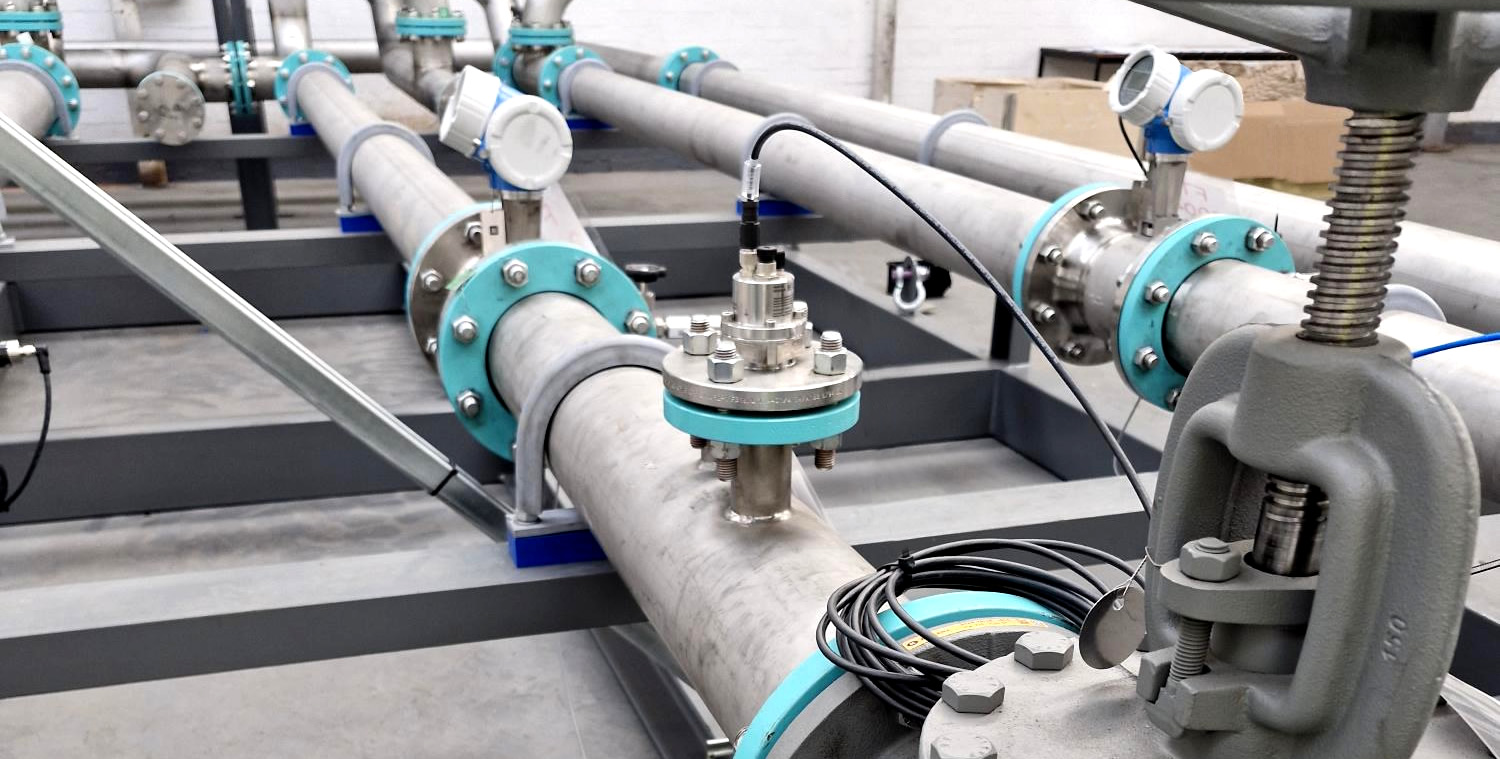
HELSINKI / AGILITYPR.NEWS / March 05, 2026 / Cool Planet Technologies, the specialist provider of membrane-based carbon capture solutions, recently organised a live demonstration of its modular carbon capture technology at a pilot plant in Grimsby, UK. Attendees were able to view real-time CO2 levels before and after capture, with continuous data provided by Vaisala MGP241 inline measurement probes.
Background
The Climate Crisis is forcing countries and businesses around the world to significantly reduce their greenhouse gas (GHG) emissions. Ultimately, this will rely on decarbonisation and a move away from fossil fuels. However, there are a number of industries for which GHG reductions will be hard to achieve. These include process emissions in the cement, lime, steel, and chemical sectors, as well as combustion emissions in processes such as waste-to-energy.
Given the urgency of the climate crisis, the proximity of Net Zero targets, and the dilemma faced by the ‘hard-to-abate’ industries, there is an enormous global demand for effective carbon capture technologies that can be economically operated at scale.
Cool Planet Technologies (CPT) was founded in 2019 by a group of mainly ex-oil/gas industry executives, with the sole objective of meeting the global demand for effective carbon capture technology.
Membrane-based CO2 capture
CPT is the commercial partner for a membrane-based carbon capture technology developed at the Helmholtz-Zentrum Hereon in Germany. This provides CPT with exclusive worldwide rights to commercialise Hereon's latest generation PolyActive™ membrane and carbon capture technology. CPT and Hereon have filed a patent application for the design of their jointly developed carbon capture module, and will continue to collaborate on the further development of the technology.
Hereon’s Torsten Brinkmann says: “Membrane technology offers a number of advantages over alternative carbon capture methods. Importantly, no chemicals or consumables are necessary, and membranes have a long lifetime of around 5 years.” Comparing Hereon’s membranes with hollow fibre membranes, Torsten adds: “Flat sheet membranes offer greater flexibility in the selection of application-specific materials, and they provide superior fluid dynamics in the gas flow path, allowing optimum exploitation of the intrinsic membrane properties.”
Summarising the advantages of their flat sheet membrane technology, CPT’s Chief Technology Officer, Simon Gorringe says: “These membranes are highly efficient, easy to work with, compact and environmentally friendly.”
A key element in the success of carbon capture will be finding economically effective opportunities for CO2 utilisation, storage or sequestration. So, once carbon dioxide has been captured by CPT’s technology, a post-processing unit can be utilised to purify or liquify the CO2 to food or sequestration grade.
Proving carbon capture effectivity with CO2 probes
In the early days of its development, the operating performance of the carbon capture modules was predicted by specifically developed simulation tools, which employ single-gas permeation data as the only experimental input. These models were then evaluated by comparisons with tests undertaken at the Grimsby pilot plant, and found to be extremely accurate – performing to within 1% of predicted CO2 capture.
CPT’s pilot carbon capture facility in Grimsby was designed to allow control of the pressure ratio across the membranes in the modules, and control of the CO2 content of the feed gas. The plant is equipped with two CPT modules, although the plant is able to accommodate four modules. The two modules in the demonstration plant operate in series, offering CO2 capture capacity up to 37,000 tonnes/annum (tpa).
Two live demonstrations of carbon capture performance by the CPT plant in Grimsby were conducted in June and October 2025, providing invited guests from industries such as lime, cement and steel with proof of concept and performance verification for CPT’s carbon capture data.
Five of Vaisala’s MGP241 probes continuously monitor CO2 concentrations in the feed gas, during the process and in both the permeate and the retentate. Data are logged once per second and carbon capture efficiency is calculated and displayed in real-time. “The accuracy and reliability of the CO2 probes is critically important,” Simon Gorringe explains. “Our initial research indicated that the Vaisala probes would meet our stringent requirements, but the pilot plant has allowed us to perform mass calculations to check their accuracy. Happily, this work was able to verify the high performance levels that the Vaisala probes deliver.”
The MGP241 probe was developed specifically to fill a gap in the market for carbon capture measurement probes. Uniquely, the MGP241 uses patented CARBOCAP® auto-calibrating infrared technology for the simultaneous inline measurement of both carbon dioxide and humidity. Importantly, the probes are able to accurately measure any CO2 concentration from 0 – 100%. Humidity measurement is also important because condensation would allow the formation of acids that would damage the equipment.
Next steps
CPT has recently announced that it has commenced the assembly of its 10,000 tonnes‑per‑annum carbon capture plant on site at Höver. CPT’s construction team is currently installing and connecting the prefabricated modules, which is expected to take around two months. Capture operations are scheduled to begin in Q2 2026 following which the plant will demonstrate the performance, economics, and operability of CPT’s technology at scale over a 12-month period, and will also utilise Vaisala probes to verify projected performance. For example, CPT will target 95% CO2 recovery. CPT and Holcim will then collaborate on the full decarbonisation of the Höver plant with plans to build a larger plant to capture around 90% of Höver’s CO2 emissions (around 800,000 tpa), at the start of the next decade.
Looking forward, CPT CEO Andrew Corner says: “With over 150 locations worldwide, Holcim represents enormous decarbonisation potential for CPT’s technology.” However, given the size and urgency of worldwide demand for decarbonisation, Andrew is keen to emphasise the global potential: “From the outset, we have been resolutely determined to ensure, not just that our carbon capture solution is modular and scalable, but also, that it is both environmentally and financially sustainable.”
Clearly, CPT is targeting all of the hard-to-abate industries, and Andrew believes that the key to unlocking this potential is the provision of trust and confidence in carbon capture efficiency. “I am very happy to acknowledge the role that Vaisala’s probes play in delivering that trust,” he explains. “Our customers need to know what levels of performance they can expect from our systems, so the inline measurement of accurate, reliable CO2 concentrations is critically important.”
Contacts