
Kinetic’s New Guide Reveals Four Key Strategies to Control Workers’ Compensation Claims Costs
NEW YORK / AGILITYPR.NEWS / February 09, 2026 / New resource for employers and risk managers outlines practical steps to help safety-critical
Organizations reduce workers’ comp claims costs and improve outcomes.
Kinetic, the tech-first workers’ compensation MGA, today announced the release of How to Manage Workers’ Comp Claims: The Complete Employer Guide for 2026, an employer-focused resource designed to help safety-critical organizations take a more active role in managing workers’ compensation claims and controlling costs.
As workers’ compensation claims grow more complex and costly, widening gaps in the claims management process cost employers time and money. While insurers and third-party administrators (TPAs) manage claims administration, it’s employer actions—particularly early in the claim lifecycle—that often have the greatest impact on outcomes. Kinetic’s guide, based on workers’ compensation claims data from safety-critical industries, provides a practical framework for employers to reduce claim duration, limit lost-time exposure, and support safer, faster return-to-work.
“Too often, claims management is treated as a static, reactionary process focused on what happens after the fact,” said Adam Price, CEO of Kinetic. “Our new guide uses real-world examples and data to show how employers’ active involvement actually changes outcomes through early reporting, communication, and consistent follow-through—without adding administrative burden.”
The four strategies highlighted in the guide are:
- Change Outcomes by Reporting Claims Early: Establish a 24-48 hour reporting standard and ensure all managers are trained on the importance of securing immediate, appropriate care after all incidents. These methods are proven to mitigate loss and optimize the best outcomes.
- Consistent Communication: Set expectations and maintain consistent, weekly communication with the injured employee to keep them engaged in their own recovery. Communication gaps often lead to frustration, disengagement, and attorney involvement.
- Rapid Return-to-Work (RTW) Programs: Structured RTW programs, which focus on modified or light-duty work for injured employees, are proven to directly counteract escalating indemnity costs (lost wages) and employee turnover. Effective RTW strategies have been shown in studies to significantly reduce overall workers’ compensation expenses.
- Leveraging Technology to Flag Small Issues Before They Grow: Small issues like missed medical appointments or uncommunicated work restrictions can cause claims to spiral. The guide highlights how AI-powered claims monitoring platforms can provide real-time alerts for employers when these small issues arise, and predictive prioritization to help staff focus their limited time on the most critical, high-risk claims.
The guide is intended for employers, risk managers, HR leaders, brokers, and insurance professionals seeking practical, field-tested guidance on improving workers’ compensation claim outcomes in 2026 and beyond.
Download a free copy of How to Manage Workers’ Comp Claims: The Complete Employer Guide for 2026 by clicking here.
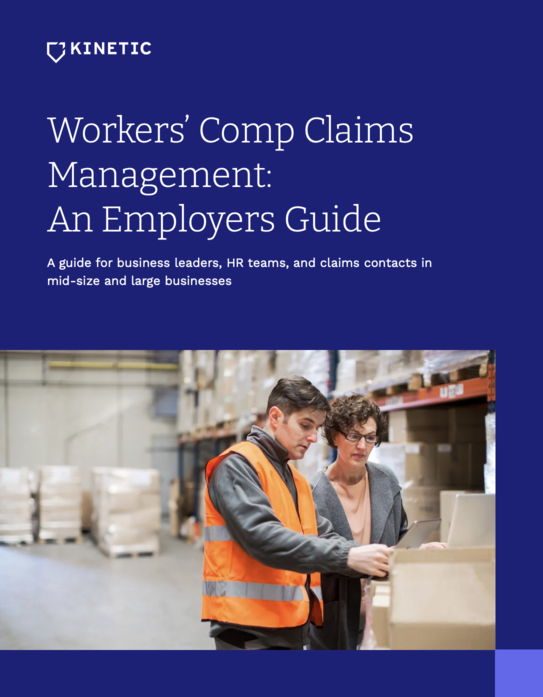
Kinetic's new resource for safety-critical employers, "Workers' Comp Claims Management: An Employers Guide

About Us
Kinetic is a tech-first Managing General Agent (MGA) focused on leveraging AI-driven technology and expert human support to transform workers' compensation claims management. By utilizing data to create actionable steps from the moment of injury through closure, Kinetic works to reduce workplace injuries, streamline the claims process, and lower premiums for businesses. For more information, visit kineticcomp.com.
Contacts