New survey lays bare the class divide in America
BRISBANE, AUSTRALIA / AGILITYPR.NEWS / February 13, 2024 / How much of a difference does your upbringing make to your life? It’s a question that’s been debated for ages and, in a world with a greater focus on equity, the wealth gap within society is under the microscope.
Compare the Market AU has done a survey of more than 1,000 Americans to ask questions about their upbringing, financial education and habits, social class and home ownership.
The survey revealed a good degree of class mobility, with 28.3% of Americans who said they grew up working class now identifying as middle class.
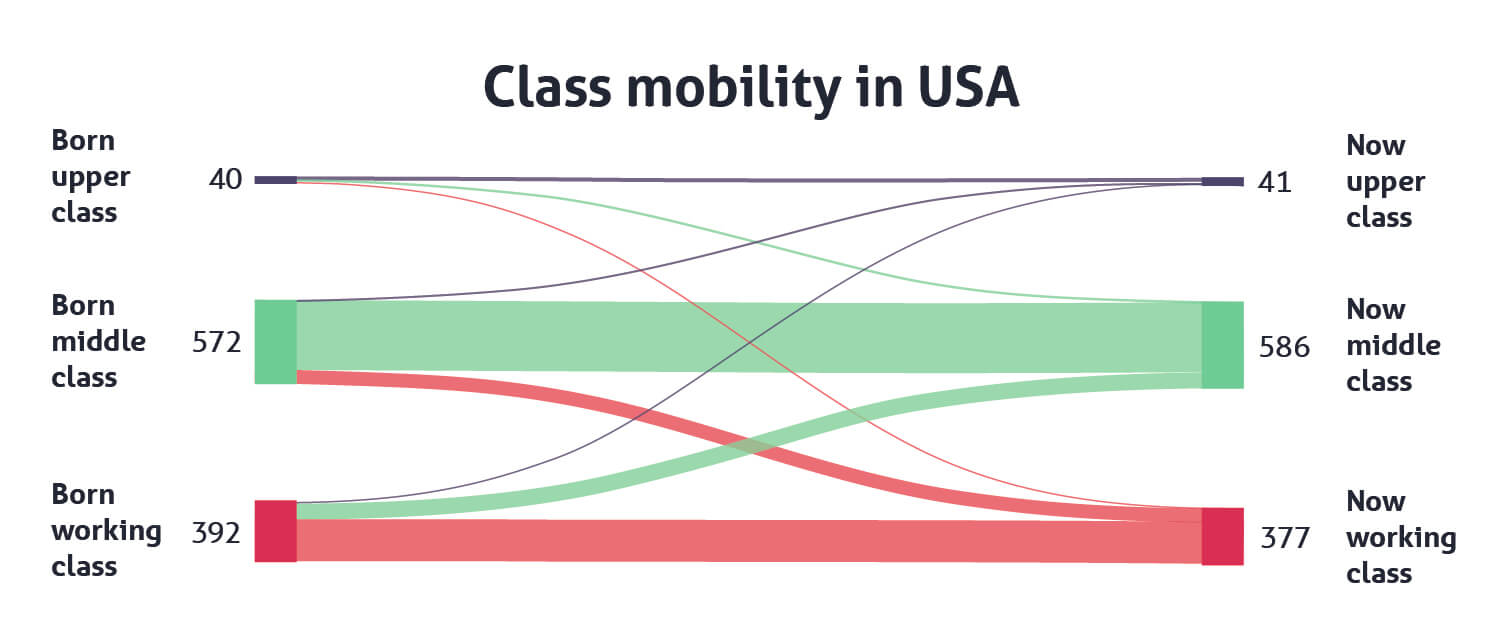
Additionally, Millennials were more likely than previous generations to say they were raised upper class. While only 2.1% of Americans aged 58 and above said they had an upper-class upbringing, this rose with each subsequent generation up to 7.4% for 26-41 year-olds. Gen Z, however, appears to have missed out on this trend, with only 1.6% of 18-25 year olds saying they had an upper-class upbringing.
Upbringing can have a big impact on how people handle money as an adult:
- 38.8% received helpful lessons on money from their parents
- 18.9% said their parents taught them, but it wasn’t helpful
- 33.7% said their parents didn’t teach them and they had to learn in other ways
- 8.6% never received lessons from their parents on money and they still struggle today
Today, almost 40% of Americans say they are a serious savers (38.0%), rarely spending money on things they don’t seriously need. Almost 30% said they would budget to save and spend money on things they want (28.1%), while over one-in-ten were impulse buyers (17.9%). Worryingly, a further one-in-ten said they rarely had savings and spend beyond their means (13.6%).
When it comes to home ownership, 80% of our survey respondents who were 18-25 year-olds were non-homeowners while 2% were homeowners (either with a mortgage or owning outright), but this changed with almost 70% of 26-41 year-olds owning a home vs 31.&% who didn’t. Older generations were even more likely to be homeowners, with over 65% of those aged 58 and above being homeowners.
Of course, on one hand, this is to be expected. The older you are, the more time you’ve had to save up money for a house. The problem is that house prices have outstripped wage growth, so those dreaming of owning a home are chasing a goal that’s getting further away from them every year.
This is where wealth (and family financial support) can make a big difference in home ownership. In America, 57.0% of the working class didn’t own a home, compared to 46.3% of the upper class who owned outright and 39.1% who owned with a mortgage. Almost 40% of the middle class owned their home outright while a further 31.6% owned with a mortgage.
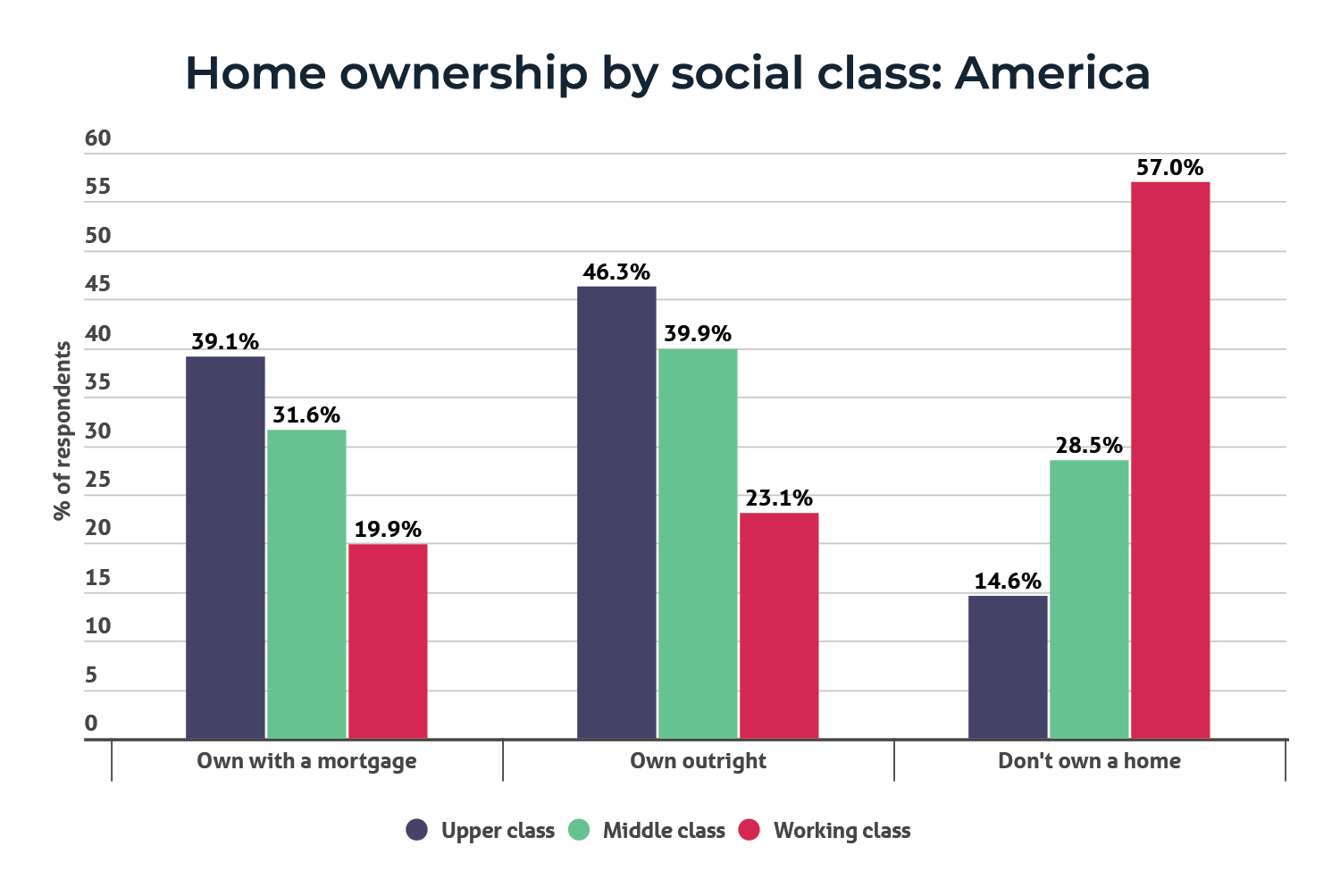
The data shows that some Americans have been able to work their way up the social ladder by having helpful guidance in childhood or educating themselves about money, but it isn’t always easy.
As Stephen Zeller, General Manager of Money at Compare the Market notes, knowledge can be the difference between sinking and swimming in an economy that seems to be set on inflation.
“There are some great resources out there to help people get a better understanding and manage their finances”
Zeller notes that prospective home buyers could save on interest by comparing interest rates.
“Saving even just a small amount in terms of your interest rate can save you thousands of dollars over the course of the loan.”
For more findings, charts and data comparisons with the USA and Australia, visit: https://www.comparethemarket.com.au/home-loans/features/wealth-gap-survey/
Contacts

James McCay
Digital PR Advisor
james.mccay@comparethemarket.com.auPhone: +61 450 930 374
www.comparethemarket.com.au/